Wednesday, February 29, 2012

Last year I went on the ASB service learning trip with Ruslan to Saint Petersburg and Vytegra, and this year I was lucky enough to return.  Returning to Russia is just about as amazing as being here for the first time.  I was overwhelmed being in this city again.  There were many things that surprised me being in Saint Petersburg the first time: the European beauty of the city, the cold Russian pedestrian façade, the striking soviet Leningrad architecture etc.  But ultimately I was most surprised that I was so overwhelmed by the exact same things again; being in a City like Saint Petersburg is an extremely surreal experience; it is so unique in this city because of its European style, its contrasts, its power, and its art.  And all of these things are visible by simply walking through the city; Saint Petersburg’s atmosphere is apparent through architecture (among other things). 


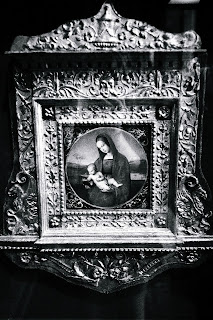
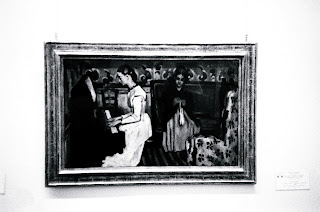
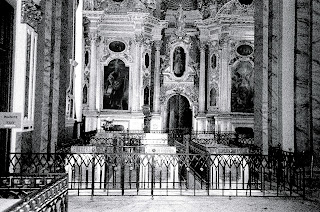
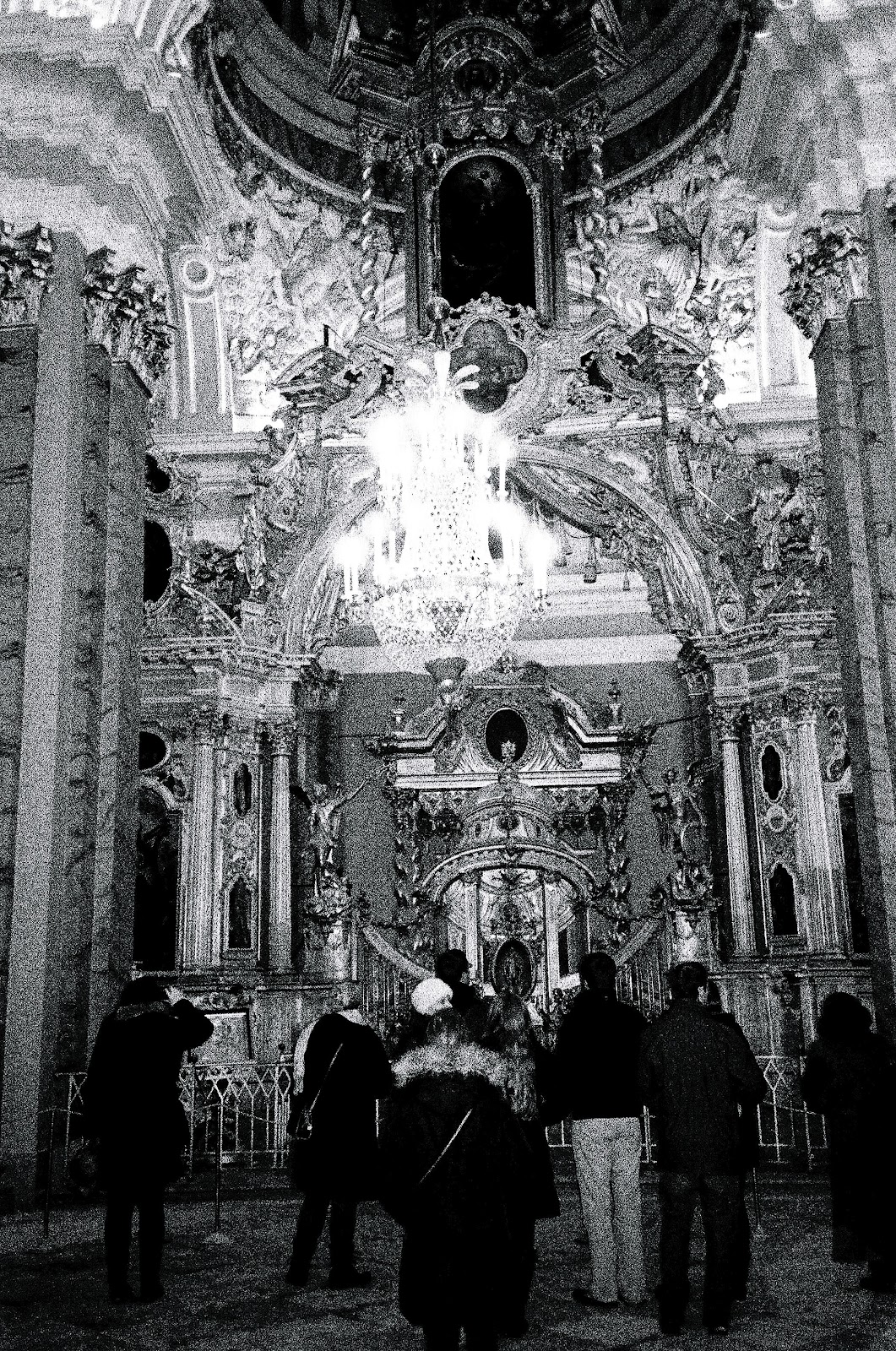
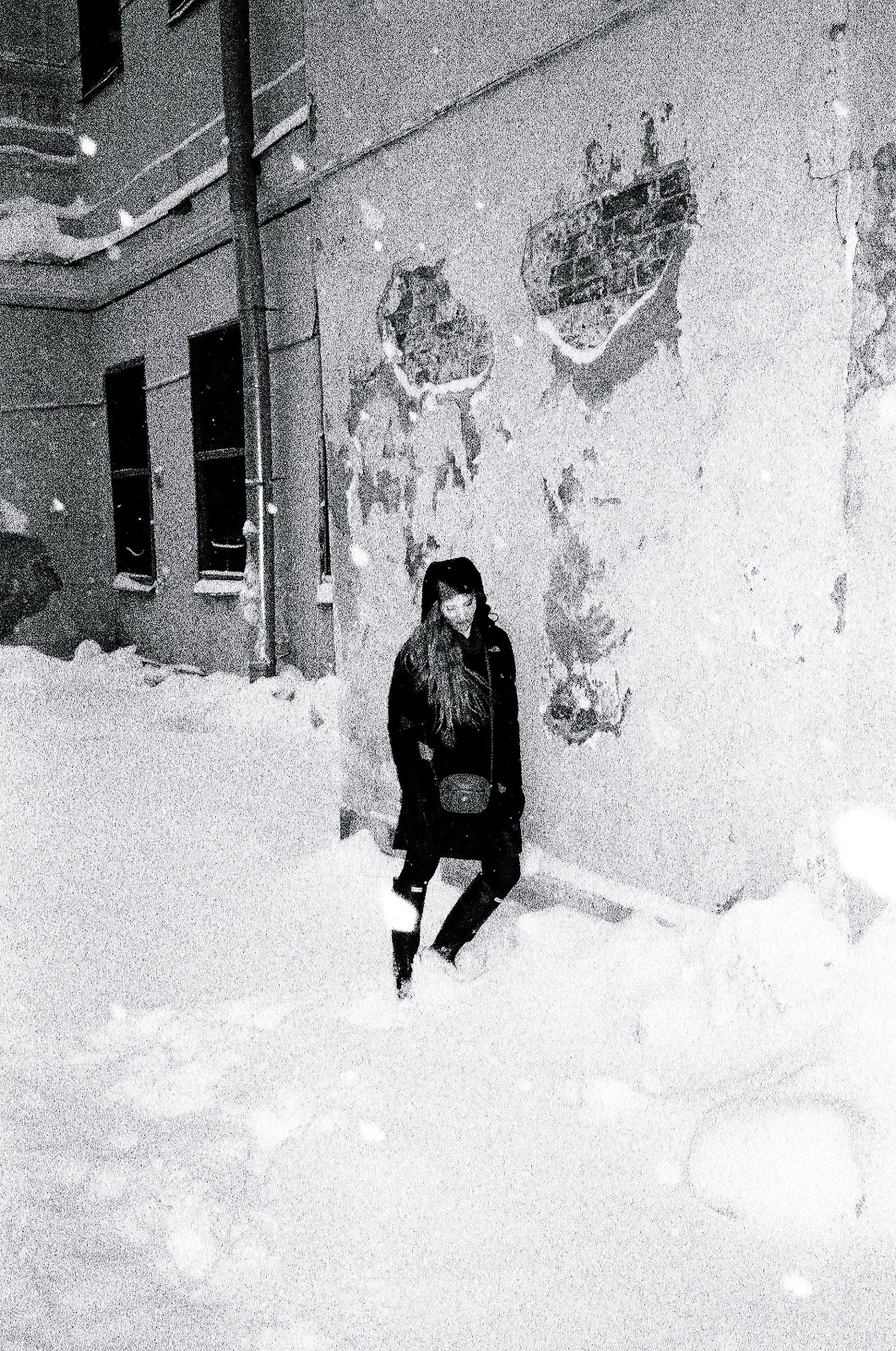
Last year I took photos on black and white film, however it took me a long time to get them processed and edited.  I think because we went to some of the same places it would be appropriate to post them now.  

Tuesday, February 28, 2012

It's startling how much western influence you find when walking around St. Petersburg.  Everywhere you go there are signs for McDonalds, KFC, and upscale Western European designers, while every neon light and road sign is printed in both the Cyrillic and Latin alphabet.  Many of the young people speak English, as we discovered in our quest to find the metro station, and it was impossible not to notice the various English words that have worked their way into the Russian vocabulary.

But then what can you expect from St. Petersburg?  It was a city built to imitate and impress the west, to prove that Russia, too, is a high culture.  The buildings remind me of those that I saw in Vienna.  Traditional Russian architecture, such as the multicolored copolas any westerner would expect, is hard to come by.  The western influence is most evident in the Hermitage, Russia's most famous art museum, an astounding palace built by some of Russia's greatest rulers, with rooms of breathtaking architecture and design, all filled with (wait for it...) western art.  Of course, there were works by Rembrandt, Raphael, and even Leonardo DaVinci (not to mention a few of the impressionists tucked away in the old servant's quarters), yet not once did I see a work by Repin or Perov.

The western influence is less visible in Vytegra, and for that I am rather thankful.  I feel that I am in the true Russia that I have read so much about in Chekhov and Gogol.  The snow glistens across the roofs of wooden houses with piles of wood outside, the city stands quiet, lacking the bustle of St. Petersburg (in the most wonderful way).  But still, the west works its way in in the most surprising and interesting ways.  Today at one of the schools, we had an extensive conversation about Star Trek and Doctor Who with one of the students.  Earlier that day the student's and performed for our enjoyment a lovely adaptation of Cinderella (they acted and spoke wonderfully!), with a soundtrack of American music, none of which i recognized, though I think most of it was from the eighties.  It surprises me to see what music makes its way across the Atlantic.  I once heard Rick Astley playing in a bathroom in Prague.  It seemed so out of place at the time, but I laughed it off.

On a side note, the bus broke down in the night on the way to Vytegra.  It was up and running again quite quickly, but that time time we had sitting in the middle of the snowy road, talking, staring into the sky, and debating weather it was worth it to go through knee deep snow drifts to find a suitable tree, was probably the best part of that bus ride.

The Voyage to Vytegra

The bus ride from St. Petersburg to Vytegra was quite the journey. Almost immediately, upon exiting the city, the wilderness began. The snow-covered landscape was beautiful beyond words, and soon enough, the distinctive paradoxes of the Russian provinces began to emerge.


A brief stop at a cafe in the countryside was an interesting experience. The cafe was nice, offered a decent variety of foodstuffs, and had a modern look to it. But then there was...the restroom. I walked in and it seemed like a normal and relatively clean restroom, with stalls and sinks, and I saw attractive and stylish women entering them. But once I opened the stall, the weirdness began. In front of me was a hole in the ground. No toilet paper, no seat...just a hole. This may be a crude topic for discussion, but striking nonetheless. I immediately felt like all of the Western qualities of St. Petersburg were flushed down the toilet (or a lack thereof). 


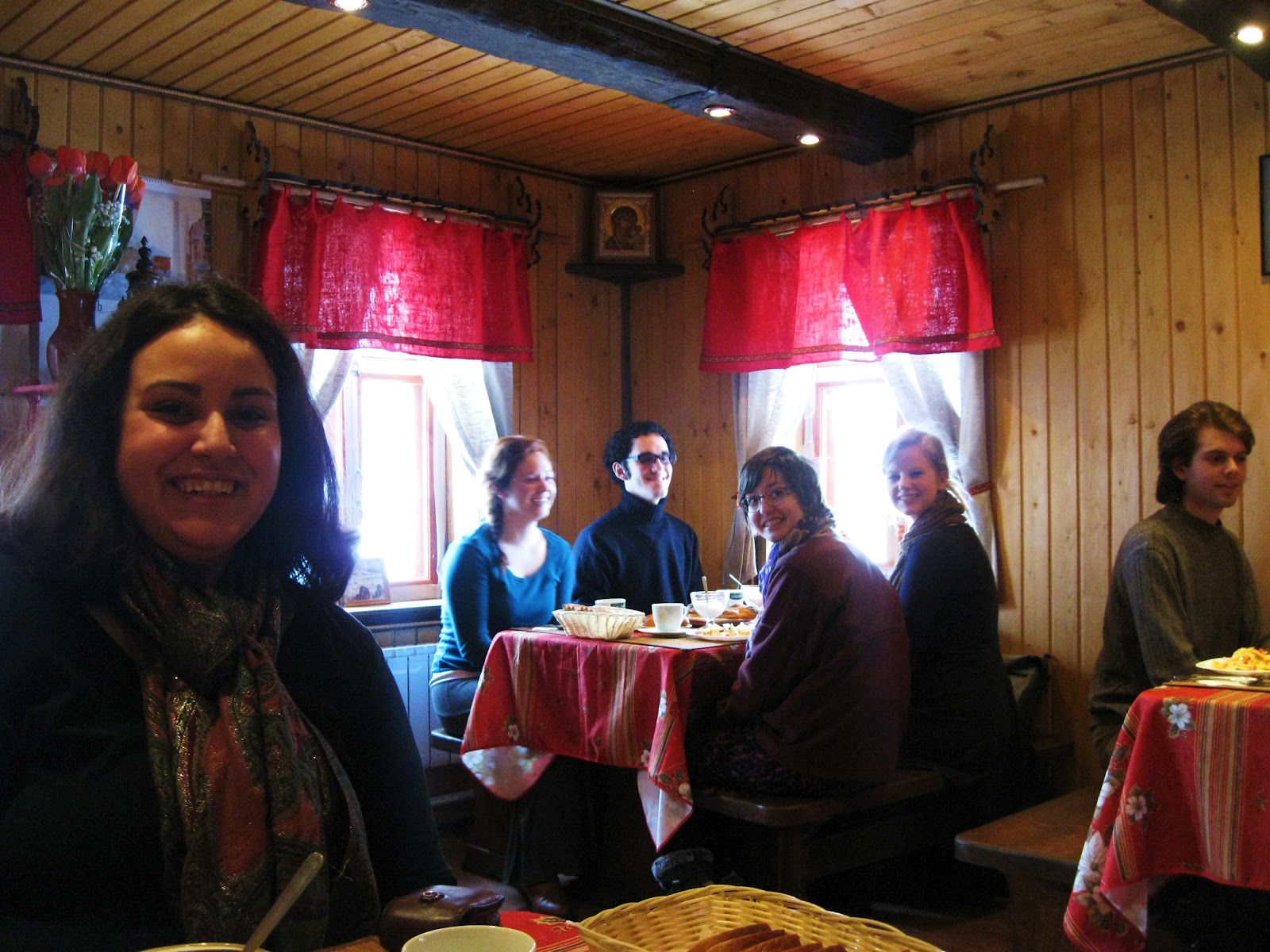
Soon we reached the village near the Alexander-Svirsky monastery. Before touring it, we ate a traditional Russian meal in a small restaurant. Upon entering the room, I immediately noticed the icon in the corner, the sweltering heat inside, and the decor that was vaguely reminiscent of an "izba" (peasant hut) out of a folktale; a quite different atmosphere than that of the European style of St. Petersburg.


The Alexander-Svirsky monastery and its architecture were as white and smooth as the abundant snow around it, blending in as if it were part of the landscape itself. It seemed as pure as the fresh, crisp air that afternoon. The priest and monks, dressed in black robes, stood in stark contrast to the blinding whiteness of the untouched snow-strewn field and ice-covered lake adjacent to the pallid monastery.


The monastery's buildings were stunningly beautiful and the setting transported my mind to another time... I immediately thought of the monastery in Dostoevsky's The Brothers Karamazov, and of the elder Zosima and his apprentice, Alyosha. 

A chorus sang for us in the cathedral. Their voices were powerful, perfectly harmonized, and resonated through the remarkable acoustics of the cathedral's interior. It felt holy, ancient, and authentic... but then, of course, came the Russian eccentricity. The chorus turned out to be a quite famous travelling chorus. After they finished their song, they strapped on their leather jackets and preceded to encourage us to purchase their CDs. One of the chorus members started conversing on his cell phone.


But apparently Russia is not the only possessor of "backwardness". Our group was instructed to enter a room containing a holy relic, where we could not take photographs, and we could either kiss the icon, cross ourselves, or merely observe. But we were given one instruction: "Do not turn your back to the alter". As we stood nervously near this holy relict, we stood facing the intricate golden altar near the icon. We then preceded to walk backwardly out of the room, awkwardly shuffling, terrified to turn our heads. The other visitors and pilgrims gave us strange looks.  As it turned out, we had not quite understood the instructions. We were supposed to not stand facing our backs to the altar, but we were allowed to walk away from it normally!

The rest of the bus ride took us through vast, seemingly never-ending forest. The snow-strewn conifers stood silently and stately. Occasionally we would see location signs, and the further we drove, the less Russian the names were. I wonder if they were derived from the Finno-Ugric people that originally inhabited the area.

It soon became dark. We were told that we were not far from our destination. Staring out my window, I caught glimpses of tiny, wooden houses with warm, glowing light streaming through their windows. What were behind those windows? Was there traditional Russianness, warmth and comfort, old babushkas and their families tending to the stoves, heating their samovars? Or were there drunken gatherings, rowdiness, secret lust and hidden demons... Here we are. We have entered the heartland.

To walk the streets of Saint Petersburg is to navigate a basket of Easter eggs. Yellow buildings, red buildings, white buildings, more yellow buildings, light blue buildings, a few more yellow buildings, green buildings, another block of yellow buildings. Each with ornate molding and designs in their façades. Each part of a monument – the city itself. Clear intent. Impress the foreigners. Intimidate the subjects. Make the guy who detest being pegged as a tourist keep his camera out and up. Saint Petersburg is as much a tsar as those who reigned from its banks. You cannot say no to it. My interest in Russia began and continues to focus on the Romanovs, so traveling to Saint Petersburg has never been just an wish. It has been a high-ranking priority. An obligation.
As our bus brought us into the city the night we arrived, I found the difference between the black sky and light-colored, floodlit buildings striking. Still, the narrow streets between imperial palaces, former mansions, and government buildings were flanked by sidewalks fit for one. The grids of windows on each side were dark, and these streets seemed to stretch like shadows. I was fascinated with each portico and dome, but there was no shortage of archways leading to the dingy courtyards that caught my eye. Some seemed to beckon.
Saint Petersburg is not all buildings and statues, though. While waiting on the bus, I watched a wedding couple taking their pictures on a bridge near the Cathedral of the Spilled Blood. An elderly woman – black dress, white head scarf, yellow plastic bag in hand – crossed the bridge, but when she saw the newlyweds, she stopped, set her bag down in the snow, and blessed them, making the sign of the cross at them until they had finished their pictures. Then, she picked up her bag and went on her way. Earlier, on that same bridge, a ballerina danced and had her picture taken.

No bus stop in the city is empty. Swarms of black coats shuffle through the metro stations and along the streets. Heeled boots. Balance and poise. Neon signs and marble steps. Splendor and squalor. The city is constrained by nature, by the islands and swamp on which it was founded, by laws regulating construction. The constrained city that was built as a monument to and model for an expanding empire.
In the lovely, but very Western-European city of St. Petersburg, we were given a tour of the city and the stunning Hermitage by our knowledgeable guide. It was clear to see that we could explore the Winter Palace and the Hermitage all day and night and still not see all there was to see and learn all there is to know about both the art movements and painters and the history of the Russian Imperial power and expansion towards a broad, world power that is culturally renown today.

This visitation of the Winter Palace and the Hermitage were especially exciting and meaningful for me. I have read a biography on Catherine the Great as well as another about Peter the Great; so, connecting the history of Catherine’s contributions and strikingly large personality to the location that brought culture to both St. Petersburg and Russia from Europe was seeing something I had daydreamed about - the place where Catherine had strolled with her gentlemen friends and improved her meager education and background as well as her country’s was euphoric. Though I knew that much of the art in the Hermitage is not of Russian movements or artists, I was surprised that we saw none at all by a native-Russian. Emphasis was very much upon the greatest, most famous – but not Russian – artists of the time; and the sheer volume of the collections of these was astonishing.


Monday, February 27, 2012

As the plane began to land, I kept my head glued to the window, wondering what would be my first sight of Russia.  I strained to see through the white clouds and caught my first glimpse of this foreign land: all I saw was snow.  I am glad to say that after our stay in Saint Petersburg I was able to experience more than the snow, but it definitely provides a constant presence, even in the city.


The next day, we got to experience St. Petersburg, beginning the morning at The Hermitage.  I found the museum to be a beautiful representation of the "modernized" city.  Having visiting the Louvre before, I could not help but compare the two.  The Hermitage did not lack the impressive repertoire that the Louvre has, even with two million less pieces.  We visited the work of almost every major painter that I have heard of (in my limited knowledge of art) along with many others, though I did notice the lack of Russian art.  What I found more striking than the Louvre was The Hermitage’s lodgings.  The Winter Palace took my breath away more often than its paintings and sculptures.  I found myself taking many pictures of doors, floors, chandeliers, and ceilings rather than the art hanging on the walls.  While the architectural ideas were taken from other countries, the magnificence from them all stood collaged together in these buildings housed in St. Petersburg.


After an amazing lunch, we headed off to see more of the city and shop.  The Church on the Spilled Blood and the Peter and Paul Fortress where more of the architectural triumphs that we were able to experience up close. There were also many more sights that flew by during our bus tour of the city.  Exhausted, we stopped back at our dorm for food and then went off again to experience the city at night.  The metro was an experience in itself, so exciting that I made sure to ride it twice.  I soon grew tired and had to end my excursion in St. Petersburg and prepare for the day-long bus ride to Vytegra.

St. Petersburg Sights

So, the RUSLAN ASB students have journeyed through St.Petersburg and made it to Vytegra. The journey has been very enjoyable, and full of amazing sights.

 Here we have the Winter Palace, which contained Catherine the Great's art collection.

The Historic District of St. Petersburg is made in a similar vein to the Winter Palace, and creates an artificial feel of what St. Petersburg is like. Outside of the military museums and various palaces, industry lies. Construction sights are common sights outside the Historic District, though few are actually being worked in. Some apartment buildings stand silent as the city’s population slowly decreases.

We also visited the Peter and Paul Fortress and saw the tombs of the Czars. Some of the Fortress was under recontruction. All the tombs were very simplistic with few adornments, in the modest way of Russian Orthodoxy, while the icons were very lavish.


As we departed from Peter and Paul Fortress we were able to glimpse some of the annual Maslenitsa festival, a celebration that ushers in Lent. As you can glimpse above, children are rolling others around in large blown up plastic bubbles. Out of frame people are silding down a giant snowhill. Unfortunately the ASB students were unable to participate.